
How Does Corten Steel Edging Complement Different Landscape Styles?
Imagine this: your garden's Corten steel edging is no longer just a simple line dividing space, but an artwork that grows over time, conversing with nature—understated yet powerful, defining boundaries while blending into the environment. This is the magic of weathering steel edging.With its unique material properties, it seamlessly adapts to diverse landscape styles, becoming a key element balancing functionality and aesthetic value. This article delves into the compatibility logic between Corten metal landscape edging and various landscape styles, while providing practical design tips and installation essentials to help you embark on your garden transformation journey.
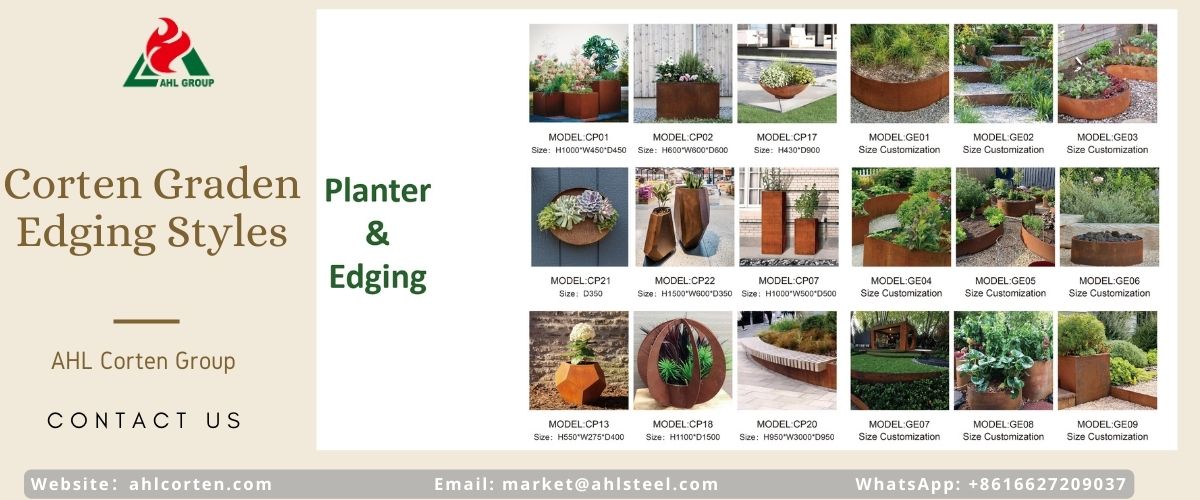
Understanding Corten Steel Landscape Edging
1. What is Corten Steel Landscape Edging?
Corten steel is no ordinary metal. When exposed to outdoor elements, its surface naturally develops a dense, protective rust patina. This patina not only shields the steel from further corrosion but also reveals a distinctive warm orange-brown hue that subtly shifts with seasons and weather, as if alive with its own rhythm.
2. Why Is It Superior to Traditional Edging Materials?
Compared to wood that rots, plastic that cracks, and rigid concrete prone to splitting, weathering steel edging offers a near-perfect solution—combining structural support with decorative appeal.Professional landscape designers champion it for core reasons: zero-maintenance durability (no painting or coating required, with a lifespan exceeding 50 years), environmental sustainability (100% recyclable with lower production energy consumption than conventional steel), dynamic aesthetic evolution (transitioning from initial metallic gray to warm rust tones, eventually maturing into deep amber hues), and exceptional structural strength (withstands soil pressure and root growth without warping or fading).
Corten Steel Edging in Modern Minimalist Gardens
1. Clean Lines Meet Texture
The essence of modern minimalist gardens lies in clean lines, open spaces, material contrasts, and monochromatic plant arrangements. In such settings, weathering steel edging acts as the “earth's sketching pen,” precisely defining spatial order.
Its warm rust hue creates striking visual contrasts with cool concrete, smooth glass, and light-colored stone. This enhances modernity while infusing warmth, preventing the space from feeling overly cold.
2. Practical Design Applications
- Linear Guidance: Utilize straight lines or precise curves to delineate lawns, gravel areas, and planting zones, establishing clear visual order.
- Raised Beds: Create 15-30 cm elevated planters for ornamental grasses or succulents, forming suspended rust-hued frames that enrich spatial depth.
3. Real-World Example: Brooklyn Rooftop Garden, New York
The designer employed 10cm-high weathering steel strips to divide the terrace into three rectangular planting zones, featuring Mexican feather grass and blue fescue. The horizontal lines of the steel strips extend the spatial perception, while the rust hue serves as a visual anchor between the gray concrete and silver grass plumes, lending cohesion to the minimalist space.
4. Recommended Plant Pairings
Ornamental grasses (pampas grass, miscanthus), structural succulents (agave, yucca), and dark-foliage plants (black-leaved hosta, purple-leaf plum) all create striking contrasts with the rust tones of weathering steel, reinforcing the modern minimalist aesthetic.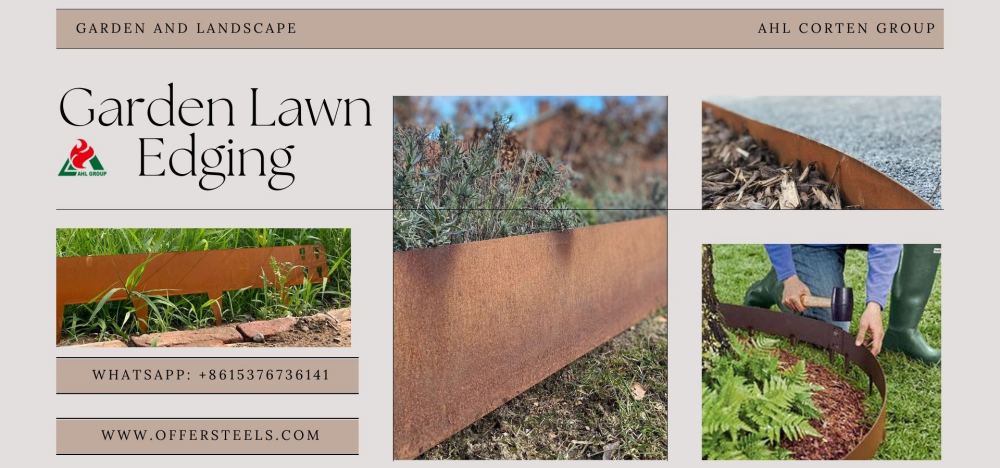
Weathering Steel Edging in Rustic Country Gardens
1. Balancing Rustic Charm and Refined Elegance
Rustic country gardens are defined by lush plantings, organic curves, nostalgic ambiance, and mixed materials. Within such spaces, weathering steel edging serves not as a stark boundary but as a gentle guide. Their warm brown tones seamlessly blend with weathered wooden fences, terracotta planters, and red brick pathways, merging artificial boundaries with organic growth. This approach prevents spatial clutter while preserving the rustic charm of the countryside.
2. Practical Design Applications
- Winding Pathways: Install steel garden bed edging along the curves of gravel paths to prevent soil erosion while allowing plants to spread naturally.
- Herb Garden Zones: Embed 10cm-high steel strips between herb and vegetable planting areas for both functionality and aesthetic appeal.
3. Expert Tips
Partially bury sections of edging to allow plants like lavender and sage to cascade softly over the edges, creating a mature garden texture that appears “weathered by time.”
Corten Steel Edging in Japanese Zen Gardens
1. Presence in Stillness
Japanese Zen gardens center on minimalism, symbolism, natural materials, and meditative ambiance. Decorative metal garden edging functions as an “invisible hand” within these spaces—subtly defining boundaries without disrupting tranquility.
Japanese garden master Toshiaki Masuno once remarked: “The soft hues and gradual texture of weathering steel align perfectly with the ‘wabi-sabi’ aesthetic—embracing imperfection, transience, and natural authenticity.”
2. Practical Design Applications
- Karesansui Boundaries: Clearly delineate white sand areas. Clean lines contrast intriguingly with raked patterns, reinforcing Zen-inspired order.
- Moss Garden Framing: Low 5-8cm decorative strips encircle moss patches, where rust tones accentuate the moss's vibrant green, highlighting intricate details;
- Material Transition: Seamlessly bridges flagstone pathways and pebble zones, preventing material clutter and maintaining spatial coherence.
Rusty Steel Garden Edging in Traditional Formal Gardens
1. A Modern Footnote in Classic Order
Traditional formal gardens are defined by symmetrical layouts, meticulously trimmed plants, classic materials, and timelessness. Corten steel lawn edging infuses subtle modernity into such gardens without disrupting their classic order.
It outlasts traditional boxwood hedges, requires less maintenance, and precisely outlines intricate geometric patterns, making classic styles more practical.
2. Practical Design Applications
- Flowerbed Outlining: Define intricate geometric borders, replacing traditional hedges for enhanced durability and tidiness;
- Rose Garden Zoning: Prevent roses from encroaching on pathways; the rust-toned backdrop accentuates floral vibrancy;
- Selective Finishing: Optionally polish sections to reveal metallic sheen, harmonizing with wrought iron details and limestone elements.
3. Real-World Application: 19th-Century Cotswolds Manor Renovation
This 19th-century estate replaced decaying wooden borders with rusted steel edging. The new trim sharply defines herb garden curves while its hue seamlessly blends with the manor's honey-colored stone walls—honoring historical texture while adding contemporary character.
Maximizing the Stylistic Impact of Corten Steel Edging
1. Height Psychology
Fully Exposed (15-30 cm): Emphasizes boundary definition, ideal for modern styles; Semi-Buried (5-10 cm): Subtly guides the eye, suited for naturalistic styles.2. Light and Shadow Application
Embed low-voltage LED strips within the trim. At night, warm rust-colored walls emit upward light, creating a dreamlike ambiance.3. Plant Pairing Formulas
Contrasting Colors: Orange-rust tones + blue blooms (salvia, agapanthus); Monochromatic Scheme: Rust backdrop + copper-hued foliage (purple-leaf European beech, oxalis).4. Integrating Dynamic Water Features
Create weathering steel sinks or waterfall walls. The interaction between water and rusted surfaces generates unique textural shifts, infusing vitality into the space.5. Artistic Processing
Custom laser-cut patterns (e.g., leaf-shaped cutouts) incorporate shadows into the design, elevating its artistic appeal.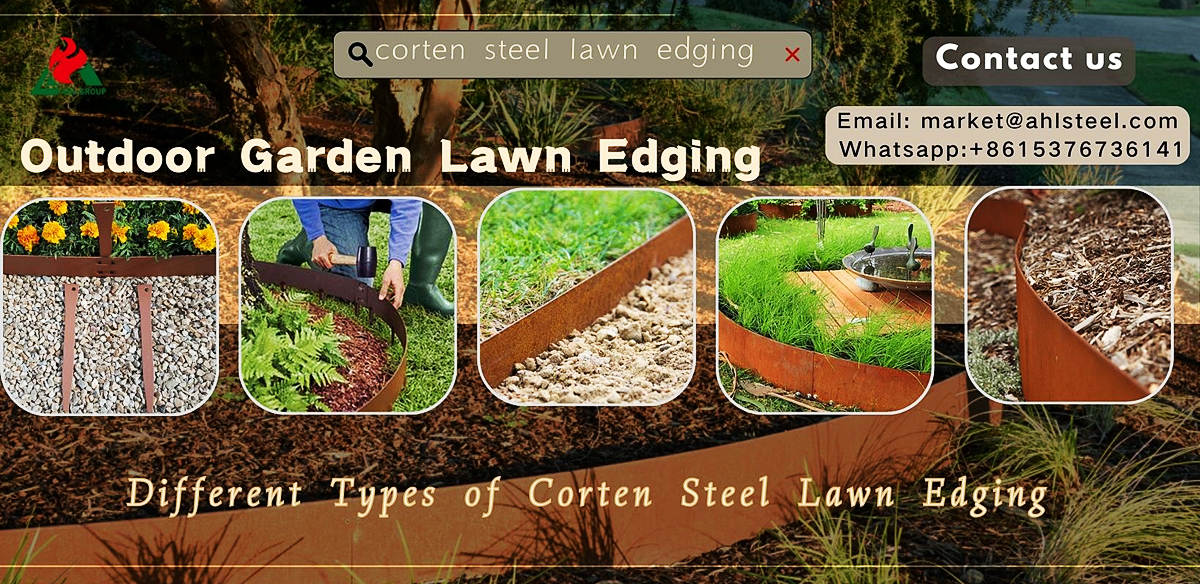
FAQ: Corten Steel Edging Compatibility with Landscape Styles
1. Would Corten Steel Edging Appear Jarring In a Minimalist Japanese Zen Garden?
No. Its soft tones and gradient texture align with Japanese wabi-sabi aesthetics. The low profile discreetly defines spaces without disrupting the garden's tranquil, meditative atmosphere.
2. Can It Withstand Salt Spray In Coastal Gardens?
Yes. The protective patina of weathering steel resists salt spray corrosion, making it suitable for coastal garden edging. Ensure proper drainage during installation to prevent water accumulation that could accelerate corrosion.
3. How Long Does Patina Maturation Take In Different Climates?
Approximately 1-2 years in warm, humid climates; 2-3 years in dry climates. Accelerate oxidation with a white vinegar solution to shorten patina development time.
4. Is Diy Installation of Edging Suitable For Curved Pathways In Rustic Garden Landscapes?
Gentle curves are DIY-friendly—prepare professional cutting tools for precise trimming. For complex, large-radius curves, professional installation is recommended.
5. Will The Rust Hue Clash With Vibrant Flowers In Traditional Formal Gardens?
Not at all. Rust tones belong to the earthy color palette, serving as a neutral backdrop that enhances floral vibrancy and adds depth to floral displays.
Ready To Customize Your Exclusive Outdoor Weathering Steel Edging?
In summary, corten steel garden edging seamlessly integrates into diverse landscape styles through its versatile adaptability, dual structural and decorative functions, and uniquely captivating patina that evolves over time.
The finest gardens aren't “built”—they're “guided” into growth. Weathering steel edging provides this guiding framework—robust yet unassuming, defining without confining. Together with every plant, every ray of sunlight, and every rainfall, it composes your unique landscape narrative. Contact us today for a complimentary quote and the latest catalog of 2026 outdoor edging solutions!
Home & Garden
- BBQ grill
- corten steel metal planter for outdoors
- garden bollards lights
- garden screens
- steel tree grates
- fire pit
- garden sculptures and statues
- garden water fountain
- garden edging
- bio ethanol fireplace
- Corten Fence Panels
- Corten Steel Water Features Manufacturers, Suppliers, Factory & Exporters | AHL Group
- Corten Steel Gardening Products
- Corten Steel Garden Edging
- Metal Gas Water Fire Fountain
- Corten Exterior Cladding
Mild Steel
Stainless Steel
Aluminum Sheet
Steel Processing & Services
News

 Get a quote, Now!