
What Height Is Best for Garden Corten Edging
Corten garden edging is currently a very popular boundary solution for both residential and commercial landscaping.When purchasing, many property owners and landscaping contractors find themselves most torn over the height specifications. No single height can suit every garden scenario; for the vast majority of standard landscaping projects, 100 and 150 mm are the most practical options.
This article will break down the suitable scenarios for different heights, explain the logic behind underground installation—an area where mistakes are easily made—compare how to choose between 100 mm and 150 mm, and introduce key purchasing considerations beyond height to help you select the right garden edging.
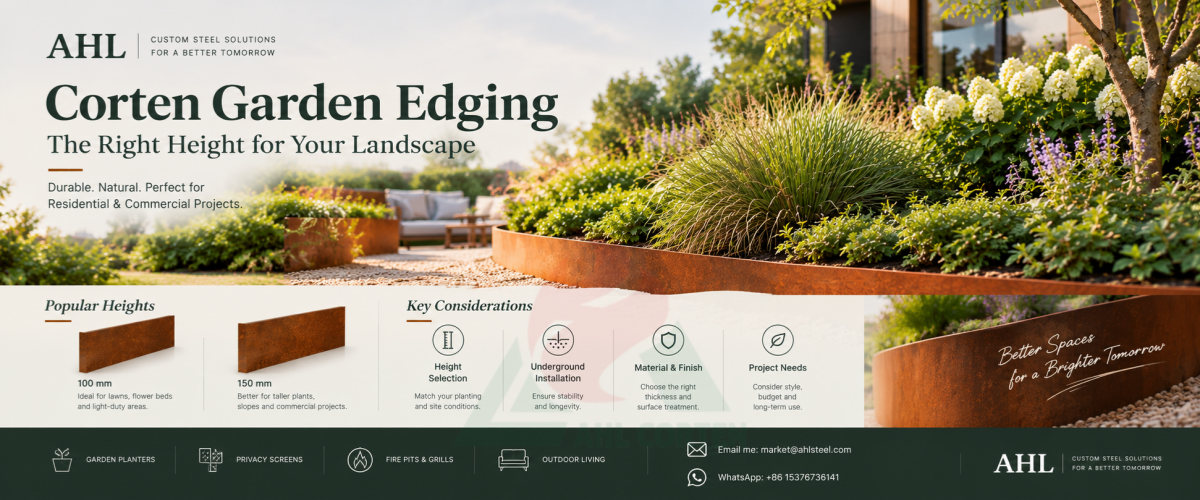
Why Height Is Crucial for Corten Landscape Edging
Weathering steel edging serves a dual purpose: it acts as both a visual boundary and a physical barrier.
Modern garden edging must not only demarcate areas such as lawns, flower beds and gravel paths, but also prevent soil, mulch and gravel from shifting or spilling over.
There is a crucial misconception here: the total height of the edging strip ≠ the visible height once installation is complete.
During installation, part of the edging must be buried underground for secure fixing. If you place an order based solely on the height visible above ground, you are likely to end up with the wrong specifications.
The mainstream garden edging strips available on the market are categorised into three height ranges: 100 mm, 150 mm, and 200 mm and 300 mm and above; each range corresponds to entirely different garden applications.
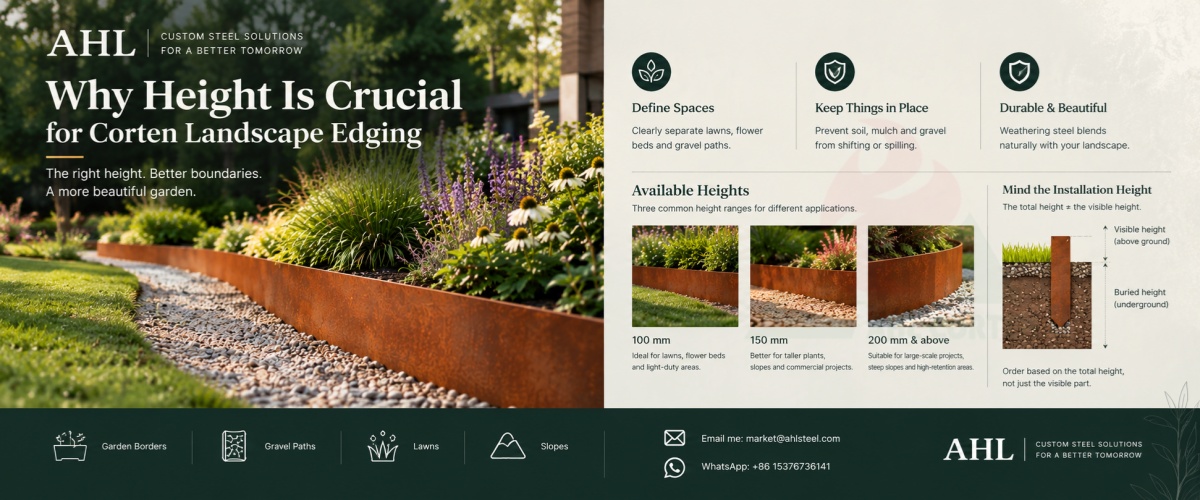
100mm Edging: Low-Profile, Minimalist Garden Edging
100mm decorative steel garden edging is a very common low-profile option for residential gardens.
With its clean, understated lines, it does not look out of place in the garden, allows for easy mowing when maintaining the lawn, and is more cost-effective.
Suitable Scenarios for Using 100mm Garden Edging Strips
- To mark the boundary between a lawn and a simple flower bed
- Private gardens with level ground
- Planting areas with low-growing plants
- Areas where there is no need to contain large amounts of gravel or soil
- Where a minimalist, modern landscape effect is desired, with the edging as close to ground level as possible
The naturally rust-brown surface of weathering steel creates a gentle contrast with the textures of lawns, greenery, stone and timber, resulting in clean, crisp landscape lines.
Limitations of 100mm Edgings
Not suitable for planting areas with thick gravel layers, sloping terrain or high soil pressure. In such conditions, the low-profile design lacks sufficient capacity to prevent materials from spilling over.
150mm Edging: The Most Versatile Mainstream Choice
If you are unsure which height to choose, the 150mm garden edging is the most versatile option with the highest margin for error.
Compared to the 100mm version, it offers greater physical containment, creates clearer visual lines, and is not so high as to appear bulky. It is suitable for both residential and commercial landscaping projects and is often the preferred choice among landscaping professionals.
Scenarios Suitable for 150mm Weathering Steel Edging
- Flower and shrub planting beds
- Areas with bark mulch or garden mulch
- Standard gravel paths
- Boundaries between lawns and planting areas
- Commercial estates and public landscaping projects
It strikes a balance between aesthetics and practicality, securing soil and mulch without creating an overwhelming sense of oppression, and covers the vast majority of standard garden landscaping requirements.
200mm and Above Weathering Steel Edgings
Garden edgings measuring 200mm and above are designed for more challenging sites, offering superior containment and earth-retaining capabilities.
Suitable Garden Edging Scenarios
- Pathways with thick gravel layers and high footfall
- High-traffic areas such as driveways
- Sloping gardens and plots requiring transitions between different ground levels
- Simple raised flowerbeds requiring greater soil containment
- Public landscapes with high footfall, such as parks and commercial projects
Higher edging strips create a more pronounced structural effect, making them suitable for designs requiring defined boundaries or the management of terrain variations.
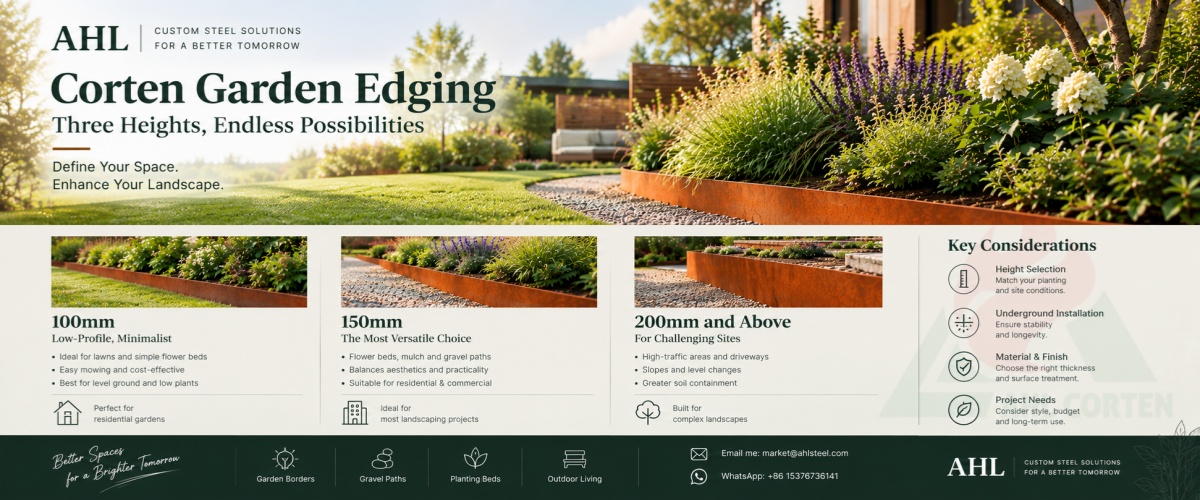
Edging for Gravel Paths: How to Determine the Height of Corten Steel
As gravel is a loose aggregate, it is prone to spreading and shifting outward following prolonged foot traffic and rainwater runoff; consequently, gravel paths have specific requirements regarding OEM Corten edging height.
- 150mm: For standard domestic garden gravel paths with level ground and a thin layer of gravel, a 150mm garden modern garden edging is sufficient to contain the gravel.
- 200mm and above: For paths with a thick layer of gravel, high footfall, or commercial public areas, it is recommended to select a height of 200mm or more to enhance the gravel’s containment effect.
Visible Height vs Total Height: The Most Common Procurement Pitfall
Many customers simply place orders based on the height they wish to be visible above ground; this is a very common procurement error.
Total edging height = Visible height above ground + Depth buried underground
For example: if you wish the boundary to be 100mm high above ground, you cannot simply purchase edging with a total height of 100mm. You need to allow for a portion to be buried in the ground for securing, so the actual total height of the edging strip you purchase must be greater than 100mm.
How Deep Should Corten Garden Edgings Be Buried?
There is no fixed standard for burial depth, as it is influenced by multiple factors:
- The softness of the soil
- Whether the area is covered in gravel
- Whether the area is on a slope
- The continuous installation length of the edging
- Footfall and soil pressure at the site
Loose soil, slopes, gravel areas and long stretches of continuous installation all require greater burial depth, combined with ground anchors and connectors to ensure overall stability.
The selection process should be as follows: first, determine the desired exposed height upon completion; then, taking site conditions into account, allow for the required burial depth; and finally, work backwards to calculate the total height of the Corten lawn edgings required.
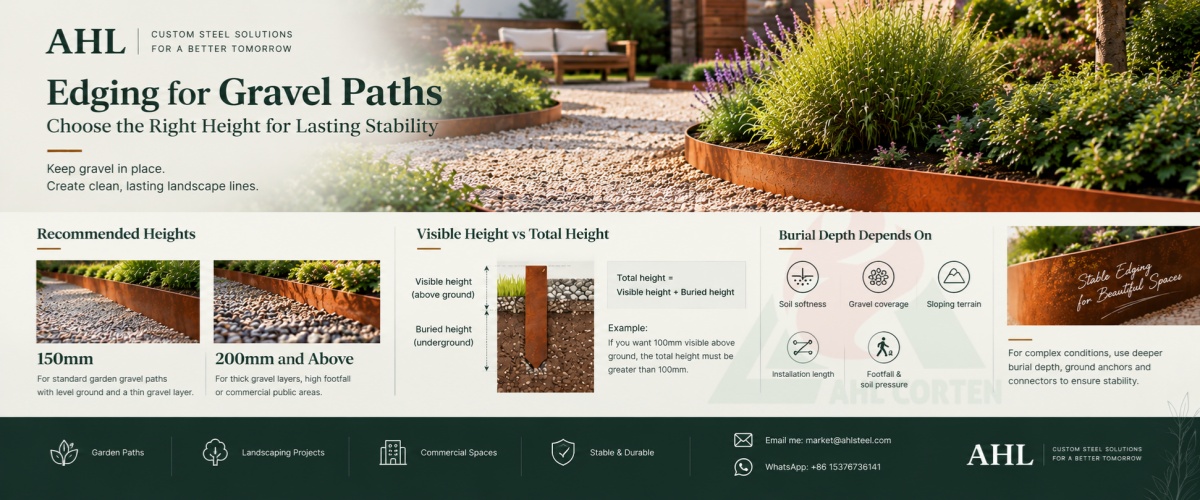
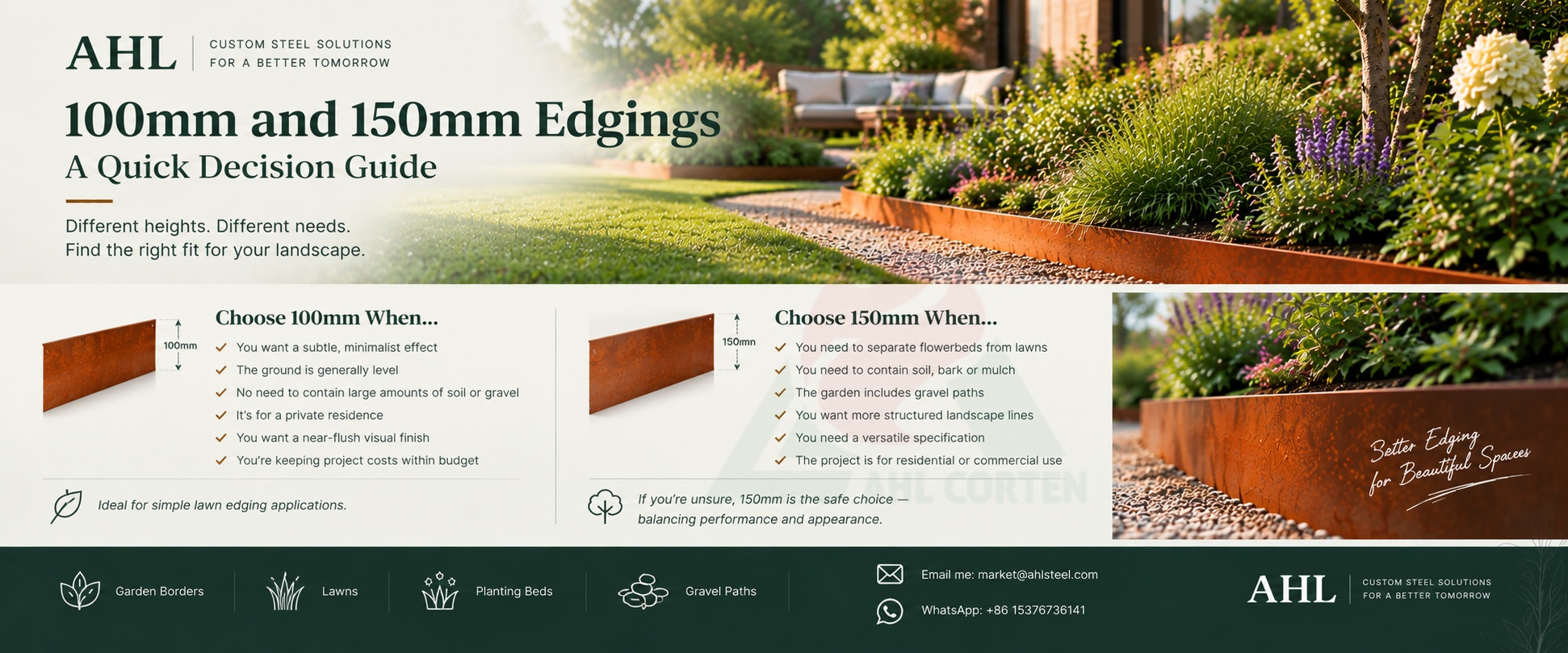
100mm and 150mm Edgings: A Quick Decision Guide
Prioritise 100mm Edgings When the Following Conditions are Met:
- You want a subtle, minimalist lawn edging effect
- The garden ground is generally level
- There is no need to contain large amounts of soil or gravel
- The landscape is primarily for a private residence
- You are seeking a visual effect that is virtually flush with the ground
- You wish to keep project costs within budget
Ideal for simple lawn edging applications.
Prioritise 150mm Garden Edging When the Following Conditions Apply:
- You need to demarcate flowerbeds from lawns
- You need to contain soil, bark or garden mulch
- The garden includes gravel paths
- You want more structured landscape lines
- You require a versatile specification suitable for a wide range of conditions
- The project involves residential or commercial landscaping
If project requirements are somewhat vague, the 150mm option is often a safe choice, striking a balance between performance and appearance.
What Other Parameters Should You Consider After Choosing the Height of Corten Edging?
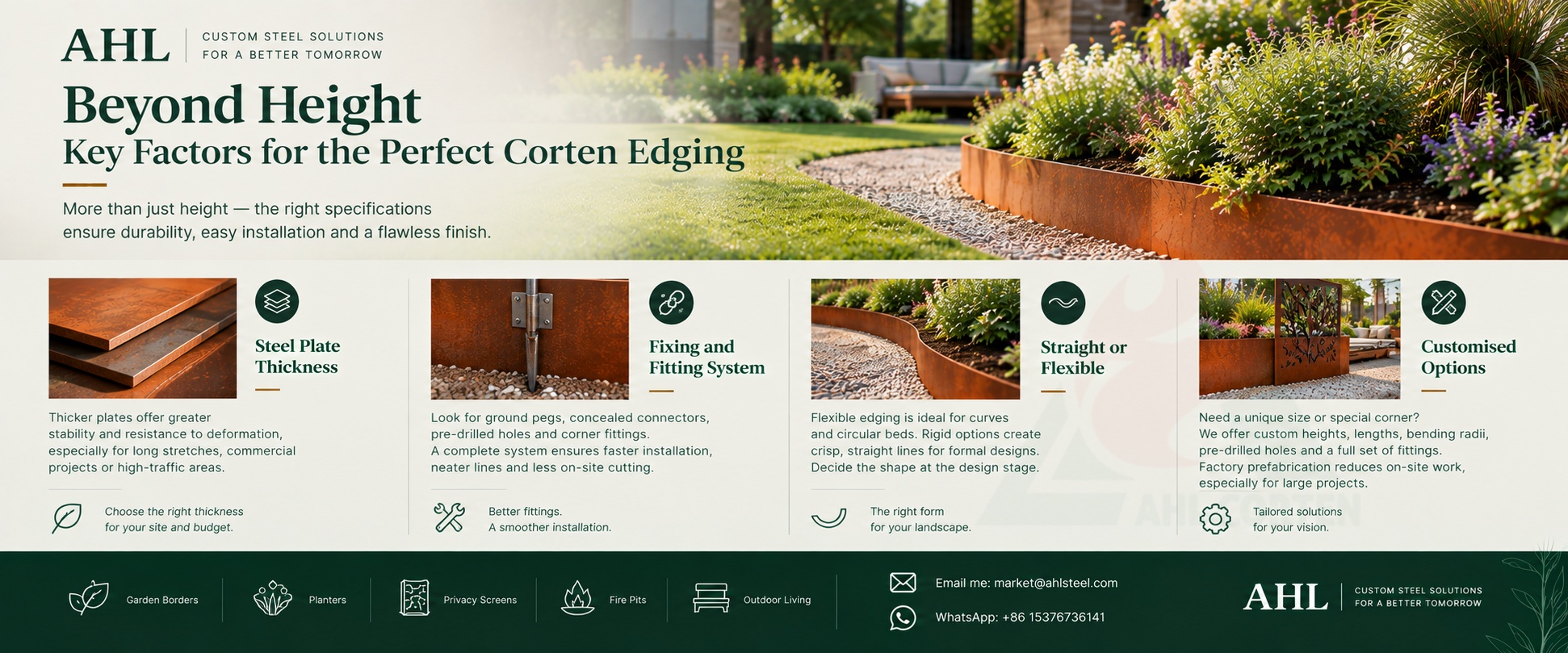
Height is merely the first step in the selection process; to ensure the finished product is durable and installation proceeds smoothly, attention must also be paid to other key specifications.
Steel Plate Thickness
Height does not equate to durability. For long stretches, commercial projects, or areas prone to impact from vehicles or pedestrians, thicker plates offer greater structural stability and are less prone to deformation. For standard domestic gardens, thickness can be selected appropriately based on the length to be laid, soil conditions and budget.
Fixing and Fitting System
Fittings directly impact installation efficiency and the final finish. Pay particular attention to whether the system includes ground pegs, concealed connectors, pre-drilled holes and corner fittings. A comprehensive range of fittings minimises the need for on-site cutting and ensures neat, continuous edging lines.
Straight or Flexible
Circular flowerbeds and winding paths require flexible, weather-resistant steel edging strips. For straight flowerbeds, rectangular planting areas and modern-style gardens, rigid straight metal garden edgings create crisp, straight lines. The desired line shape should be determined at the design stage.
Customised Garden Edging Options
For large-scale landscaping projects, standard dimensions may not always match the design requirements. You can opt for customised heights, lengths, bending radii, specialised corner fittings, pre-drilled holes and a full set of connecting fittings.
Precision factory prefabrication significantly reduces the amount of on-site modification work required, with the benefits being particularly evident in large-scale projects such as hotels, parks and residential estates.
Why Edging Is the Preferred Choice for Garden Landscaping
Weathering steel, also known as patinated steel, gradually develops a dense, stable rust-coloured protective layer when exposed to the outdoor environment, eliminating the need for additional paint or anti-corrosion treatment.
Its naturally warm rust-brown hue harmonises beautifully with greenery, lawns, natural stone, timber, concrete, gravel and modern building façades.
It serves not only as a physical boundary but is also an integral part of the garden landscape design itself, offering a long service life and requiring very little maintenance.
Frequently Asked Questions (FAQ)
Q1: What Is the Optimal Height for Corten Steel Edgings?
For most standard garden projects, 100 and 150 mm are the most practical and common options.100 mm is suitable for lawns and low flowerbeds; 150 mm is suitable for planting areas, mulch and standard gravel paths; for sites with significant elevation differences or high pressure from gravel, choose 200 mm or above.
Q2: Should I Choose 100 mm or 150 mm for Flowerbed Edging?
Both can be used for flowerbeds. 100 mm is visually understated and suitable for simply demarcating lawns from flowerbeds. The 150mm option provides better containment of soil and bark mulch. If requirements are unclear, opt for the 150mm version.Q3: What Is the Appropriate Depth for Burying Corten Edgings Underground?
There is no standardised burial depth. The depth depends on soil type, terrain, edging height, fixing method and intended use. Remember not to base your order solely on the exposed height above ground; the buried section must be included in the total height of the weathering steel garden border.Q4: What Height Should Be Used for Garden Edging Strips On Gravel Paths?
For standard domestic gravel paths, 150mm is recommended; for paths with thick gravel, high footfall or commercial sites, 200mm or a higher specification is advised.Q5: Are Custom Dimensions Available for Corten Edgings?
Yes. Height, length, curvature and corner configurations can all be customised. For large-scale projects, a full set of fixing and connection components can also be provided.Summary
A simple mnemonic for selecting the correct height:
- 100 mm: Lawns, simple, low-rise flowerbeds
- 150 mm: Flowerbed planting areas, mulch, standard gravel paths (the general recommendation)
- 200 mm and above: Heavy-duty gravel retention, slope level differences, high-traffic areas
If you are planning a private garden or a commercial landscaping project, please provide details of the site conditions and intended use, and we can assist in selecting the most suitable garden edging height, board thickness and a full set of installation fittings to create a neat and secure landscape boundary. Contact us today!
Want the Latest Catalog of Garden Edging? Contact Us!
Home & Garden
- BBQ grill
- corten steel metal planter for outdoors
- garden bollards lights
- garden screens
- steel tree grates
- fire pit
- garden sculptures and statues
- garden water fountain
- garden edging
- bio ethanol fireplace
- Corten Fence Panels
- Corten Steel Water Features Manufacturers, Suppliers, Factory & Exporters | AHL Group
- Corten Steel Gardening Products
- Corten Steel Garden Edging
- Metal Gas Water Fire Fountain
- Corten Exterior Cladding
Mild Steel
Stainless Steel
Aluminum Sheet
Steel Processing & Services
News
 Get a quote, Now!