
Maintaining Your Corten Steel Lighting: Expert Tips
Why Do Corten Steel Lights Require Professional Maintenance?
Corten steel lights have become the preferred choice for outdoor lighting due to their distinctive rust patina aesthetic and exceptional durability. However, they are not a “set-and-forget” maintenance-free product.Professional maintenance balances two core requirements: firstly, protecting the development of its signature rust patina to sustain its natural beauty; secondly, ensuring the electrical system remains safe and stable, preventing hazards such as moisture ingress and wiring deterioration.
Drawing on landscape lighting experts' insights, this guide offers a comprehensive, actionable maintenance plan for corten outdoor lights—covering tool preparation, safety protocols, routine cleaning, seasonal upkeep, and fault diagnosis—ensuring your investment continues to shine for decades.
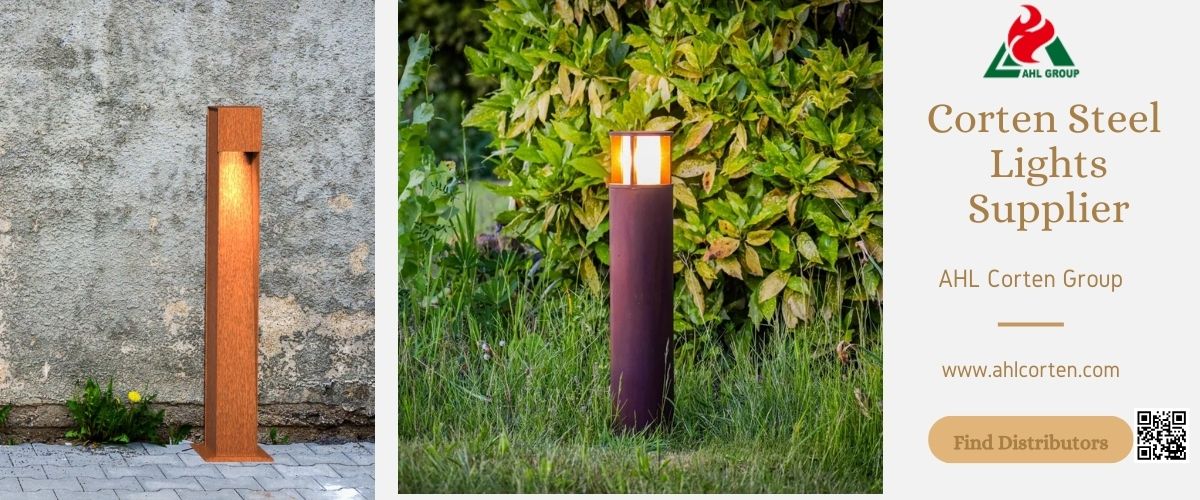
Understanding the Material: Foundational Maintenance for Corten Steel Path Lights
1. The Protective Logic of Corten Steel's Rust Layer
The rust layer on weathering steel is not ordinary rust, but a dense protective coating composed of elements like copper, phosphorus, and chromium. This layer blocks moisture and oxygen, enabling self-repair.
Its development occurs in two key stages:
- Exudation Phase (0-12 months): The surface appears bright orange, with potential ‘rust water exudation’ that may stain hard landscaping elements.
- Maturation Phase (12+ months): The rust layer gradually densifies, transforming into a deep chocolate brown hue, at which point its protective capacity reaches its peak.
The core maintenance principle is: do not disrupt the rust layer's development; avoid external damage or chemical corrosion.
2. Core Components and Maintenance Focus of Lights
Corten steel lighting primarily consists of three parts, each with distinct maintenance priorities:
- Weathering steel casing: Maintenance focuses on promoting uniform rusting, preventing localised flaking or pitting;
- Electrical system: Includes LED modules, drivers, and wiring. Core priorities are waterproofing/moisture resistance and checking connection integrity;
- Sealing components: IP65/IP67-rated seals and gaskets require regular elasticity checks to prevent moisture ingress.
Essential Tools and Consumables: Prerequisites for Safe Maintenance
1. Basic Cleaning and Inspection Tools
Prepare the following tools, avoiding implements that may damage the luminaire:
- Cleaning tools: Soft-bristle brush (e.g., hog bristle brush), microfibre cloth, plastic scraper (substitute for metal scrapers);
- Inspection tools: Multimeter (verify power disconnection), torch (examine internal structure), compressed air canister (for dust removal);
- Protective gear: Non-slip gloves, safety goggles, slip-resistant footwear (essential for outdoor work).
Recommended Safe Cleaning Consumables
Select mild, non-corrosive cleaning products to prevent rust layer damage:
- Preferred: Neutral detergent (pH ~7) + distilled water (to avoid hard water scale);
- Supplementary: 50% water + 50% white vinegar solution (promotes uniform rust layer development, for exudation phase only);
- Specialised: Oxalic acid cleaner (for ground rust stains only; must not contact fixture body).
Absolutely Prohibited Products and Tools
The following items will directly damage corten steel garden lights and must be avoided:
- Chemicals: Acidic/alkaline cleaners, chlorine bleach, oil-based sealants;
- Tools: Wire brushes, steel wool, high-pressure water jets (pressure > 30 PSI), metal scrapers;
- Others: Paint, spray paint (blocks rust layer respiration, causing internal corrosion).
Safety First: Core Electrical Maintenance Protocols
The primary risk in maintaining outdoor metal garden lights is electric shock. The following safety procedures must be strictly adhered to:
The Three-Step Method for Power Disconnection
- Disconnect power: Switch off the corresponding circuit breaker in the distribution box and lock it to prevent accidental re-engagement;
- Verify absence of voltage: Use a multimeter to test the fixture's terminals, confirming no current is present (residual capacitive charge may require additional verification);
- Wait for discharge: After power disconnection, wait five minutes to allow internal capacitors to fully discharge before commencing work.
Situations Requiring Professional Electricians
Under no circumstances attempt repairs yourself in the following instances; contact qualified personnel immediately:
- Electrical faults: Exposed wiring, frequent circuit breaker trips, smoke or unusual noises from the driver;
- Structural issues: Deformed steel outdoor light casings, cracked welds, loose mounting foundations;
- Special environments: Coastal salt spray zones, industrial areas (highly corrosive, requiring professional testing);
- Uncertainty: When the cause of the fault or the appropriate remedy is unclear.
Regular Cleaning: Detailed Procedure for Periodic Maintenance
Weekly Quick Clean (5-10 minutes)
Core Objective: Remove surface debris, prevent drainage holes from becoming blocked, and conduct an initial condition check.
Steps:
- Use a soft-bristled brush to clear dust, fallen leaves, and cobwebs from the casing (particularly within laser-cut patterns);
- Wipe the casing with a damp microfibre cloth to remove surface dust;
- Clean the lampshade/lens to ensure light transmission;
- Inspect the drainage holes at the base of the weather-resistant steel lightbox to ensure they are unobstructed (water accumulation may cause pitting corrosion).
Monthly Deep Clean (30 minutes)
Core Objective: Remove stubborn stains, inspect electrical components and seals.
Procedure:
- Strictly follow power disconnection safety protocols;
- Prepare a neutral cleaning solution and thoroughly wipe the luminaire casing with a soft cloth;
- Gently scrape stubborn residues (e.g., bird droppings, resin) using a plastic scraper, avoiding excessive force;
- Rinse the housing with distilled water to prevent limescale deposits from hard water;
- Allow to air dry naturally (never use a hairdryer on hot setting to prevent thermal deformation);
- Inspect electrical connections: ensure terminals are secure and free from corrosion;
- Examine seals: manually check for hardening or cracking; apply a thin layer of silicone grease for maintenance if necessary.
Quick Inspection Checklist (Monthly)
□ Housing intact with no extensive flaking or pitting;
□ Luminaire illuminates normally without flickering or reduced brightness;
□ No moisture or condensation inside the lens/diffuser;
□ Sealing rings remain firm with no signs of ageing;
□ Drainage holes unobstructed with no water accumulation;
□ Terminal connections secure with no corrosion such as verdigris.
Seasonal Maintenance Guide: Key Maintenance Focuses for Different Climates
Core Maintenance Schedule for All Seasons
| Season | Maintenance Frequency | Core Tasks |
| Spring | Once every 2 weeks | Clean winter salt residues; Inspect shell cracks caused by freeze-thaw; Replace aging seals |
| Summer | Once a week | Remove insect corpses/nests; Check seal softening caused by high temperature; Increase lens cleaning frequency |
| Autumn | Once every 2 weeks | Clean fallen leaves and fruit residues; Strengthen waterproof sealing; Tighten loose fasteners |
| Winter | Once a month | Remove snow and ice with a soft brush (metal tools prohibited); Clean snow-melting salt in time; Reduce outdoor operation frequency |
Additional Maintenance for Corten Light Boxes in Special Environments
- Coastal salt spray zones: Rinse the casing with distilled water after each storm; clean every 3-4 days to prevent salt particle accumulation;
- Industrial Zones: Deep clean twice monthly with neutral detergent to remove dust and corrosive contaminants;
- Arid High-UV Zones: Inspect seals monthly for sun-induced hardening; avoid prolonged direct sunlight exposure (use sunshades if necessary).
Maintenance ‘Must-Do’ and ‘Must-Not’ Quick Reference Guide
Mandatory Maintenance Guidelines (✅ Do's)
✅ Before all maintenance, strictly follow the power-off → test for electricity → discharge procedure;✅ Clean using gentle tools such as soft-bristle brushes or microfibre cloths;
✅ Clean the housing only with neutral detergent or distilled water;
✅ Regularly inspect drainage holes to ensure they remain unblocked;
✅ Record maintenance dates and details to establish a maintenance log;
✅ Promptly address leaks to prevent rust water staining floors.
Absolutely Prohibited Operations (❌ Don'ts)
❌ Perform any maintenance while energised or in damp conditions;❌ Use acidic/alkaline cleaners, wire brushes, or high-pressure water jets;
❌ Painting weathering steel casings or applying sealant oils;
❌ Scraping stains or ice/snow with metal tools;
❌ Neglecting ageing seals and delaying replacements;
❌ Failing to clean salt spray or dust in coastal/industrial settings for extended periods.
Common Scenario Comparison Table
| Scenarios | ✅ Correct Practices | ❌ Wrong Practices |
| Cleaning Shell Stains | Wipe with neutral detergent + soft cloth | Scrub with steel wire brush + bleach |
| Removing Snow and Ice in Winter | Gently sweep off with soft brush | Scrape with metal shovel or rinse with hot water |
| Handling Lampshade Fogging | Power off to air dry + replace sealing ring | Open lampshade with power on or dry with hot air |
Frequently Asked Questions for Corten Steel Lights
Q1: How Often Should Rusted Steel Lights Be Cleaned?
A: In standard environments, weekly light cleaning and monthly deep cleaning suffice. In coastal salt spray zones or industrial areas, increase frequency to surface cleaning every 3-4 days with two deep cleans per month.Q2: Can Corten Steel Lights Be Cleaned With a High-Pressure Water Jet?
A: Not recommended. High-pressure jets (water pressure > 30 PSI) can damage the dense rust layer and may force moisture into electrical components. If rinsing is necessary, use only the low-pressure spray setting on a garden hose.Q3: Will the Rust Layer On Corten Steel Continue To Corrode The Interior?
A: No. A mature rust layer forms a dense protective barrier that prevents corrosion from penetrating inward. However, if the rust layer is damaged by external forces (e.g., wire brush polishing) or subjected to prolonged contact with corrosive substances, localised corrosion may occur and requires prompt attention.Q4: When Must Professional Maintenance Be Sought?
A: When any of the following occur: 1. Electrical faults (circuit tripping, exposed wiring, driver malfunction); 2. Structural damage (casing cracks, weld separation, loose foundations); 3. Recurring issues like water accumulation in lampshades or LED flickering; 4. Uncertainty regarding maintenance methods, risking luminaire damage.Q5: Can Corten Steel Lights Be Painted to Prevent Rust Seepage?
A: Strongly discouraged. Painting obstructs the steel's ‘breathing’ mechanism, trapping internal moisture and accelerating corrosion while completely compromising its distinctive patina aesthetic. To minimise seepage, opt for AHL's pre-oxidised luminaires.Q6: What Is the Lifespan of Led Components? Should They Be Replaced Proactively?
A: LED modules typically last 15-20 years, while drivers last 10-15 years. No pre-emptive replacement is needed. Replace components only when signs appear, such as a 30% drop in brightness, flickering, or failure to illuminate. We recommend using original manufacturer parts to ensure compatibility.Q7: What Special Precautions Should Be Taken for Winter Maintenance?
A: The core principles are ‘frost protection, salt protection, and temperature differential protection’:1. Use a soft-bristled brush to clear ice and snow; avoid metal tools.
2. Promptly remove residual de-icing salt by rinsing with distilled water.
3. Avoid sudden hot water rinsing of luminaires in low temperatures to prevent thermal shock cracking of the casing.
4. Minimise outdoor maintenance frequency; schedule work during sunny midday periods where possible.
Q8: What Are the Key Maintenance Considerations for Lights In Coastal Regions?
A: The primary focus is ‘salt spray corrosion prevention’: 1. Rinse salt particles from the housing surface with distilled water after each storm; 2. Perform light cleaning every 3-4 days and deep cleaning twice monthly; 3. Inspect seals monthly, replacing any aged components immediately; 4. Conduct annual ultrasonic thickness testing to assess housing corrosion.
Why Choose AHL Corten Group's Maintenance Support?
Professional maintenance relies on superior products and technical backing.
AHL Corten Group delivers comprehensive safeguards:
- Product advantages: Supplies pre-oxidised luminaires with surface stabilisation treatment, minimising initial seepage and rust staining to reduce maintenance complexity;
- Genuine components: Provides matched LED modules, drivers, seals, etc., ensuring stable performance post-replacement;
- Professional Services: Customised offerings including on-site maintenance, ultrasonic inspections, and IP waterproof testing for commercial/residential applications;
- Technical Guidance: One-to-one maintenance consultations, bespoke maintenance plans, and troubleshooting solutions;
- Global Assurance: Dedicated logistics and after-sales teams guarantee timely delivery of maintenance components with seamless service coverage.
Ready to Customise Your Very Own Outdoor Corten Steel Light Boxes?
The allure of corten steel path light lies in its natural aesthetic that deepens over time and its enduring performance. Proper maintenance is key to preserving this charm.
No complex procedures are required. Simply adhere to the core principles of ‘gentle cleaning, regular inspections, and prompt replacement of ageing components’ to ensure your weathering steel lighting operates safely for 20-30 years or more. This preserves its distinctive rust patina while guaranteeing stable illumination.
Rather than incurring costly repairs after failure, proactive daily maintenance safeguards your investment and upholds the aesthetic integrity of your outdoor landscape. Contact AHL Corten Group today for complimentary quotations and catalogues of our weathering steel light boxes.
Home & Garden
- BBQ grill
- corten steel metal planter for outdoors
- garden bollards lights
- garden screens
- steel tree grates
- fire pit
- garden sculptures and statues
- garden water fountain
- garden edging
- bio ethanol fireplace
- Corten Fence Panels
- Corten Steel Water Features Manufacturers, Suppliers, Factory & Exporters | AHL Group
- Corten Steel Gardening Products
- Corten Steel Garden Edging
- Metal Gas Water Fire Fountain
- Corten Exterior Cladding
Mild Steel
Stainless Steel
Aluminum Sheet
Steel Processing & Services
News
-lp.jpg)

 Get a quote, Now!