
How to Maintain Corten Steel Fire Pits
One of the key reasons corten steel fire pits have become a popular outdoor choice is their “low maintenance” nature. However, “low maintenance” does not equate to “zero maintenance”—proper care is not a complicated process, but rather simple upkeep that aligns with the material's inherent properties.Proper care not only extends the lifespan of your custom corten fire pit to decades but also allows its unique vintage patina to develop evenly, maintaining its aesthetic appeal. Crucially, maintaining weathering steel requires no harsh chemicals or complex tools—it follows nature's course entirely, setting it apart from fire pits made of other materials.
This guide breaks down the complete maintenance plan for your weathering steel fire pit—from daily cleaning to stain removal, seasonal care to troubleshooting—empowering you to master essential techniques effortlessly.

Understanding Your Fire Pit's Patina: The Core of Maintenance
To properly care for your corten steel propane fire pit, first grasp its “protective barrier”—the patina. This seemingly ordinary rust layer is the very heart of its upkeep.
1. What is Corten Steel Patina?
Corten steel is a “weathering steel” that naturally forms a dense oxide rust layer when exposed to oxygen and moisture—what we call “patina.”This rust film isn't the “corrosion byproduct” of ordinary steel—it acts as a protective shield that locks in the underlying metal, preventing further rusting. This process gives the fire pit both strength and a unique aesthetic, developing character with use.
2. Three Stages of Patina Development
Developing patina on a weathering steel fire pit takes time, with different maintenance priorities at each stage:
- Initial Stage: Surface appears deep gray with no visible rust marks.
- Active Rusting Stage: Orange-brown rust marks emerge, with occasional rust water seepage (lasting 2-12 months).
- Stabilization Stage: Patina fully forms with a dense texture, rust water seepage nearly ceases, and the fire pit develops a uniform antique copper-brown hue.
3. Why Does Patina Mean “Low Maintenance”?
Once the patina reaches the stable stage, the rusted steel fire pit becomes virtually “maintenance-free.” This natural protective layer requires no additional painting or sealing, withstanding wind, rain, and intense heat on its own, freeing you from the hassle of frequent upkeep.
Daily Care: Basic Maintenance for Weathering Steel Fire Pits
The core of daily care is “gentle cleaning and prompt removal.” Simple steps effectively extend the fire pit's lifespan.
1. Post-Use Cleaning: Ash and Debris Removal
After each use, always wait until the fire pit has completely cooled (at least 24 hours) before cleaning.
Use a small shovel or brush to remove ashes and charcoal residue from the interior. This prevents debris buildup that could affect future use and inhibits mold growth in damp conditions. Wear gloves during cleaning to avoid burns from hot ashes or staining your clothing.
2. Surface Cleaning: Gentle Handling, No Abrasives
When the fire pit surface accumulates dust or grease, gently wipe it down with warm water mixed with a small amount of dish soap using a soft cloth or soft-bristled brush.
Critical Precautions: Never use steel wool, abrasive cleaners, or harsh chemicals. These products damage the protective patina layer, accelerating rust formation and potentially causing pitting or flaking. After wiping, rinse thoroughly with clean water and allow to air dry naturally.
3. Seasonal Maintenance Schedule
Adjust maintenance focus according to seasonal changes to keep your fire pit in optimal condition:
- Spring: After winter, inspect the corten steel outdoor fire pit's structural integrity. Clear accumulated debris like fallen leaves and dead branches to prepare for the season.
- Summer: In dry climates, regularly remove ashes to prevent spontaneous combustion of debris from high temperatures. In humid areas, monitor patina development without additional intervention.
- Fall: Promptly clear fallen leaves to prevent decay and adhesion to the pit surface. Plan winter storage or protective measures in advance.
- Winter: Use breathable covers only during extreme weather (e.g., heavy rain, blizzards). Keep the pit exposed otherwise to ensure patina develops normally.
Core Challenge: Managing Rust Water Seepage and Stains from Corten Fire Pits
Rust water seepage is a normal occurrence during the active patina formation phase (first 6-12 months). Proper prevention and cleanup can prevent surface damage.
1. Preventing Rust Stains: Choose the Right Location + Implement Protection
- Ideal placement surfaces: Gravel, lawns, sealed concrete, or other areas resistant to staining;
- Avoid surfaces: Light-colored/porous materials (e.g., limestone, travertine, wooden decks) that readily absorb rust stains;
- Essential protective gear: Use fire-resistant mats or specialized protectors (e.g., Frontier Designs Deck Protector) for the first 6-12 months to block heat and prevent rust water from contacting the ground.
2. Rust Stain Removal Methods: Step-by-Step Approach from Mild to Strong
If rust stains appear on the ground, select the appropriate method based on stain severity while avoiding damage to the surface material throughout the process:
- Mild stains: Mix warm water with dish soap. Gently scrub using a stiff-bristle brush or nylon pad, then rinse thoroughly.
- Moderate stains: Spray white vinegar or lemon juice, let sit for several minutes, then gently wipe. The mild acidity dissolves surface rust without damaging the floor.
- Stubborn stains: Mix baking soda with a small amount of water into a paste. Apply to the stain, let sit for 10-15 minutes, then scrub and rinse with clean water. Alternatively, use a stone/concrete-specific cleaner (formulas containing oxalic acid or citric acid work best). Test on a small, inconspicuous area first.
- Professional treatment: For deep stains, diluted hydrochloric acid may be used (only on stone/concrete surfaces). Always wear gloves and goggles, strictly follow dilution instructions, and have a professional perform the task.
3. Tips to Reduce Rust Water Seepage
Prevent water accumulation beneath the fire pit and ensure proper drainage in the placement area.
After heavy rain, hose down the ground around the fire pit to prevent rust pigment deposition.
To accelerate patina stabilization, periodically spray with saltwater (1:1 water-salt mixture) to promote oxide layer formation and shorten rust seepage cycles.
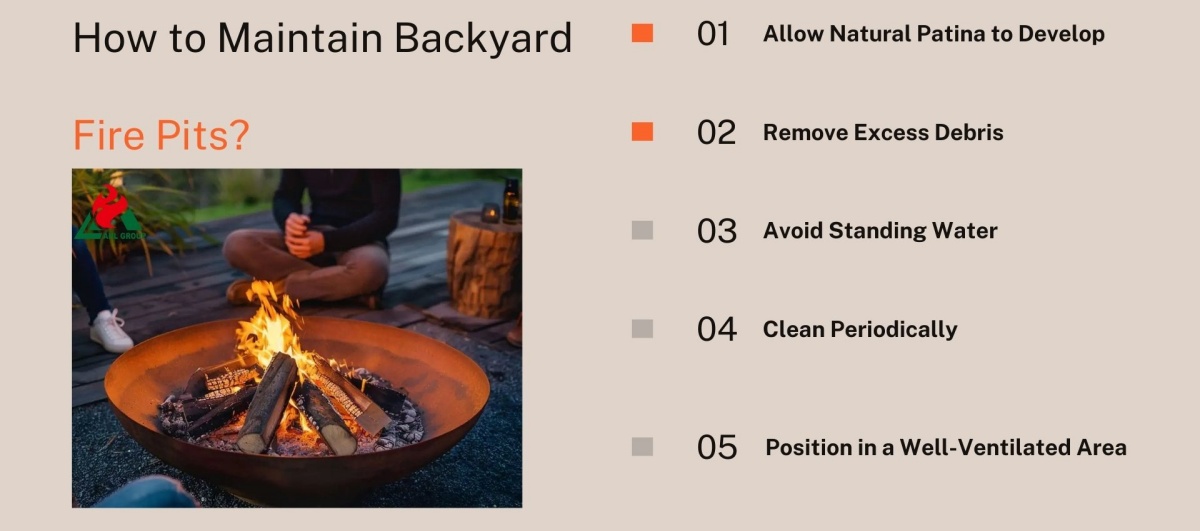
Key Maintenance: Scientific Management of Moisture and Coverings
Moisture is essential for patina formation, but excessive standing water causes uneven rusting. Improper coverings hinder patina development.
1. Prevent Water Pooling: Ensure Drainage + Choose Placement Wisely
- Ensure the custom corten fire pit has drainage holes at the bottom to prevent rainwater accumulation inside, which accelerates rusting of the underlying steel.
- Place in slightly elevated, well-drained areas away from low-lying spots or beneath drainage ditches to avoid prolonged water immersion.
2. Covering Guidelines: “Expose When Necessary, Cover When Required”
Must-expose scenarios: During active use and patina formation phases, allow full exposure to wind and rain for even patina development.
- Coverable scenarios: During extreme weather (heavy rain, blizzards, typhoons), use breathable covers to prevent moisture from becoming trapped inside.
- Prohibited scenarios: Before patina stabilization (first 6-12 months), never use non-breathable plastic covers or sealed enclosures, as this causes uneven rusting and compromises aesthetics.
Troubleshooting: Addressing Surface Abnormalities on Corten Steel Gas Fire Pits
During regular use, issues like uneven surfaces or marks may appear. There's no need for excessive concern, as most can resolve naturally:
1. Distinguishing Normal Patina from Abnormal Rusting
Normal patina forms as an even, smooth orange-brown layer. If rust flakes off, pits appear on the surface, or localized excessive rusting occurs, this indicates an abnormal condition requiring prompt attention. ·
2. Repairing Uneven Rust or Marks
For localized uneven rust, gently brush away loose rust with a soft brush. Spray a small amount of saltwater and allow natural weathering to gradually unify the patina. If marks remain from objects placed on the surface, avoid deliberate cleaning. Continued exposure to wind and rain will naturally fade these marks as the patina develops.
3. Preventing Artificial Damage
Avoid scraping the surface with sharp tools. Do not burn harmful materials like trash or plastic in the fire pit, as these actions can damage the patina and even harm the steel.
Special Scenarios: Targeted Maintenance Recommendations
Maintenance priorities vary slightly across different usage environments. Precise responses ensure the fire pit's longevity:
- Coastal / Humid Regions: Salt spray and high humidity accelerate patina formation, potentially causing more noticeable rust seepage initially. Enhance ground protection; regularly rinse the fire pit surface with fresh water to reduce salt buildup and prevent localized accelerated rusting.
- Prevent High-Temperature Damage: Avoid prolonged burning of excessively large flames. Use appropriately sized wood to prevent high temperatures from deforming the steel or causing the patina to peel off.
- Never Seal Weathering Steel: Do not apply sealants or paint to “prevent rust.” This blocks patina formation, leading to internal corrosion and shortening the fire pit's lifespan.

Frequently Asked Questions About Corten Steel Fire Pit
1. Will a Outdoor Fire Pit Permanently Stain My Patio?
Typically not. Rust seepage is usually surface residue rather than penetration into the material. Prompt cleaning removes it completely. Proper protection during the first 6-12 months stabilizes the surface, minimizing future rust seepage.
2. How Often Should i Clean a Corten Fire Pit?
Clear ashes promptly after use. Clean surface dust or grease as needed, typically every 1-2 months. Avoid frequent cleaning, as excessive wiping can hinder patina development.3. Can Patina Formation Be Accelerated to Reduce Rust Seepage?
Yes. Regularly spraying the surface with saltwater (1:1 water-salt mixture) or a solution of vinegar, salt, and hydrogen peroxide accelerates oxidation, stabilizing the patina faster and shortening the rust seepage cycle.4. Can Steel Wool Be Used to Clean Corten Fire Pits?
No. Steel wool is an abrasive tool that will scratch the protective patina layer, causing internal rusting of the steel and potentially leaving unsightly marks that compromise both aesthetics and durability.
5. How Long Does It Take For The Patina On a Fire Pit To Stabilize?
Typically 2–12 months, depending on local climate (faster in humid areas, slower in dry conditions). Once stabilized, rust seepage largely ceases, and the pit develops a uniform antique copper-brown patina.
6. How Should Ashes From Fire Pits Be Disposed Of?
Once wood ashes have fully cooled (recommended storage for one week), small amounts can be added to compost to enrich soil nutrients. They may also be scattered around plants to deter snails and slugs. Coal ashes are unsuitable for gardening and should be cooled before disposal as regular waste (following local recycling guidelines).
Conclusion: Embracing the Low-Maintenance Beauty of Fire Pits
The essence of caring for a Corten steel fire pit lies in “going with nature and intervening sparingly.” It requires no complex maintenance routines or frequent time commitments. Simply understand the patina formation process, perform basic cleaning, protect against rust water, and manage moisture levels. This will ensure it accompanies you through decades of outdoor enjoyment.
The charm of fire pits lies not only in the warmth and ambiance they provide, but also in the unique texture of their patina as it evolves over time—each rust mark etches memories of outdoor gatherings, and every use adds to its character.
In 2026, choosing a rusted steel fire pit means embracing a hassle-free, long-lasting, and warm outdoor lifestyle. Follow the maintenance guidelines in this article to keep it in optimal condition with minimal upkeep, adding enduring vintage charm and practical value to your garden.
.jpg)
Home & Garden
- BBQ grill
- corten steel metal planter for outdoors
- garden bollards lights
- garden screens
- steel tree grates
- fire pit
- garden sculptures and statues
- garden water fountain
- garden edging
- bio ethanol fireplace
- Corten Fence Panels
- Corten Steel Water Features Manufacturers, Suppliers, Factory & Exporters | AHL Group
- Corten Steel Gardening Products
- Corten Steel Garden Edging
- Metal Gas Water Fire Fountain
- Corten Exterior Cladding
Mild Steel
Stainless Steel
Aluminum Sheet
Steel Processing & Services
News



 Get a quote, Now!